Protecting the Plate: 7 Essentials for Menu Engineering
Margins across the hospitality sector have never been under more pressure. With volatile food costs, rising labor expenses, and a guest base that is increasingly discerning about where they spend, the "standard" menu is no longer enough. To thrive, operators need a menu that is commercially resilient without losing its soul.
At Radiant Hospitality, we view menu engineering not just as a pricing exercise, but as a strategic alignment of brand identity, operational reality, and the "Golden Triangle" of COGS.
Here is how we approach optimizing your menu performance.
1. Concept is Your North Star
Many menu issues start long before a single dish is priced. Over time, "feature creep" sets in as operators try to please everyone, resulting in a cluttered, confusing offering. If your brand is built on elevated Levantine dining, adding burgers or sushi just to "widen appeal" actually dilutes your value. Every dish must reinforce why a guest chose your venue over the competition.
2. Move Beyond Headline Costs
A dish might look profitable on a spreadsheet but quietly erode your margins in the kitchen. True costing must account for the "invisible" elements: oils, garnishes, packaging, and waste. More importantly, factor in labor. A high-prep dish that requires specialist skills during a peak rush can create a bottleneck that costs you far more than the ingredients on the plate.
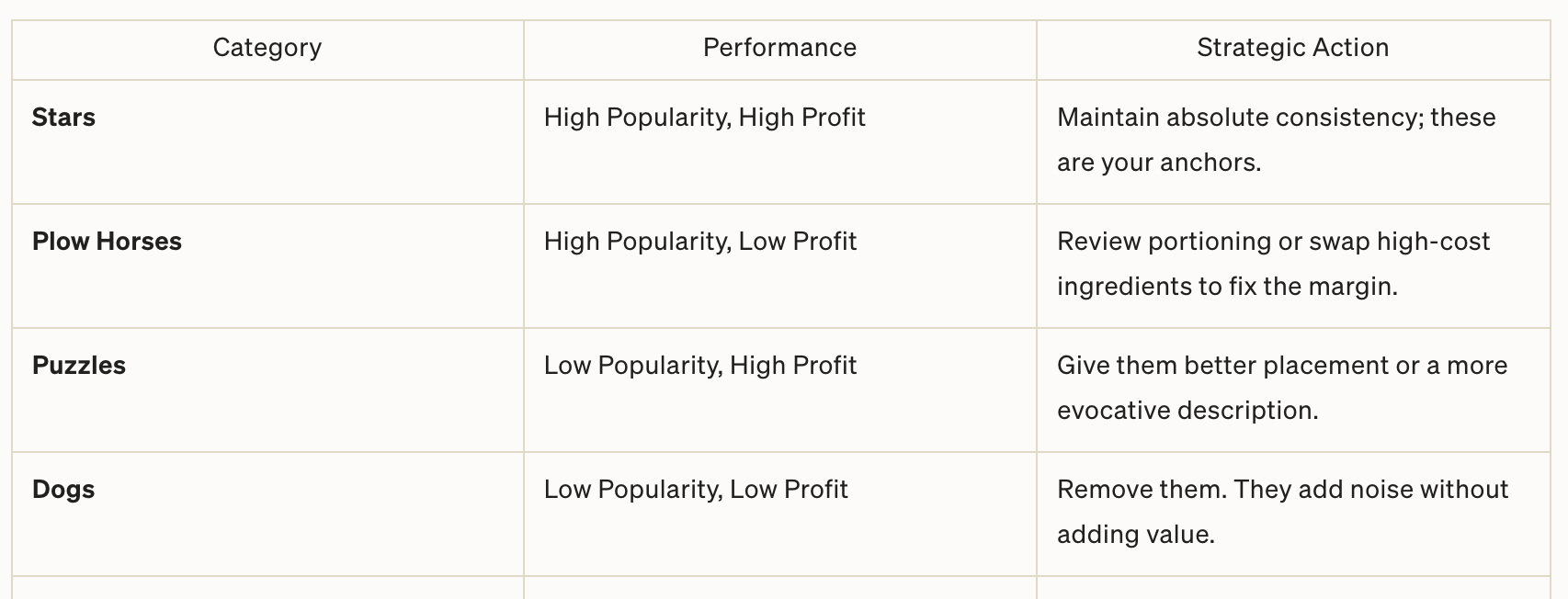
3. Master the Performance Matrix
Not every best-seller is a winner. We use a clear framework to categorize your menu and dictate your next move:
4. Audit Operational Feasibility
A beautiful plate during a tasting can become a nightmare at 8:00 PM on a Saturday. If a dish requires complex plating or equipment that creates a kitchen bottleneck, it’s a liability. We advocate for menus that remain creative but are designed for consistent execution at volume.
5. Build in Strategic Flexibility
Supply chains are no longer predictable. Menus built around highly volatile, imported ingredients are high-risk. Design your dishes with "seasonal pivots" in mind—structures that allow for ingredient substitutions based on market availability without forcing a total menu reprint or changing the guest experience.
6. The Science of Portion Control
Portion sizes are often where profitability goes to die. Overly generous portions increase your COGS without necessarily driving guest satisfaction—especially if plates are returning to the dish pit half-full. Conversely, cutting too deep hurts value perception. Regular audits ensure your portions align with your concept's positioning and your bottom line.
7. Menu Engineering is a Discipline, Not a Project
The most successful hospitality businesses treat their menu as a living document. Guest behavior shifts, and market costs fluctuate weekly. By treating menu engineering as an ongoing discipline rather than a once-a-year task, you can respond to declining margins before they become a crisis.
Need to protect your margins?
At Radiant Hospitality, we help operators bridge the gap between culinary creativity and commercial reality. Let's look at your numbers.